Best Knee Braces (2026) – Tested & Physio-Recommended Picks
Expert-reviewed knee braces for injury recovery, sports support, pain relief, and everyday stability
Knee braces and supports play a vital role in stabilising joints, protecting injured structures, and aiding recovery. Whether you're recovering from an injury, managing chronic knee pain, staying active in sports, or need support for daily activities, physiotherapist-reviewed braces can help you safely support your knees.
These recommendations are based on clinical insights, comfort, durability, and evidence-based use.
Top Picks for 2026
| Pick | Product | Best For | Price (approx.) | Why It Stands Out |
|---|---|---|---|---|
| Best Overall | ComfyMed Adjustable Knee Brace | General recovery & support | £25-£35 | Physiotherapist-approved, comfortable, adjustable |
| Best for Sports | Mueller Sports Knee Support | Runners & athletes | £20-£30 | Lightweight, stabilizes during movement |
| Best for Severe Instability | DonJoy Performance Knee Brace | Severe instability & chronic pain | £150-£250 | Firm support, reduces joint strain |
| Best Budget | Shock Doctor Knee Compression Sleeve | Beginners & casual users | £10-£20 | Affordable, basic support, good value |
Detailed Product Reviews
🥇 ComfyMed Adjustable Knee Brace – Best Overall
Best for: General recovery, daily support, mild to moderate knee instability
Features: Adjustable straps, breathable fabric, flexible support
Price: £25-£35
Suitable for: Post-injury recovery, daily activities, office workers, mild arthritis
The ComfyMed Adjustable Knee Brace offers versatile support for everyday use and recovery. Its adjustable straps allow for a custom fit, making it ideal for people managing mild to moderate knee instability or post-injury rehabilitation.
Benefits:
- Comfortable for extended wear during daily activities
- Easy to adjust for different leg sizes
- Breathable material prevents overheating
- Provides moderate support without restricting movement
- Ideal for complementing physiotherapy exercises
Pros
- Comfortable for long wear
- Easy to fit and adjust
- Versatile for various activities
Cons
- May feel bulky under tight clothing
- Not suitable for high-impact sports
Physiotherapist Commentary: Suitable for mild to moderate knee instability; complements rehab exercises. Best choice for general recovery and daily support needs.
🏃 Mueller Sports Knee Support – Best for Sports
Best for: Runners, athletes, active sports, movement stability
Features: Lightweight sleeve, open patella design, flexible fit
Price: £20-£30
Suitable for: Running, basketball, tennis, cycling, gym workouts, active recovery
The Mueller Sports Knee Support is designed specifically for active individuals who need stability during movement without sacrificing flexibility. The open patella design reduces pressure on the kneecap while providing compression and support to surrounding structures.
Benefits:
- Lightweight design doesn't hinder athletic performance
- Open patella reduces kneecap pressure during activity
- Provides compression to improve proprioception
- Flexible fit accommodates various movement patterns
- Moisture-wicking material keeps skin dry during exercise
Pros
- Supports athletic activity without restriction
- Flexible fit for dynamic movements
- Lightweight and breathable
Cons
- Limited firm support for severe injuries
- Not recommended for post-surgical recovery
Physiotherapist Commentary: Ideal for runners or sports requiring movement stability. Excellent choice for active individuals managing minor knee discomfort or preventing injury during training.
🦴 DonJoy Performance Knee Brace – Best for Severe Instability & Chronic Conditions
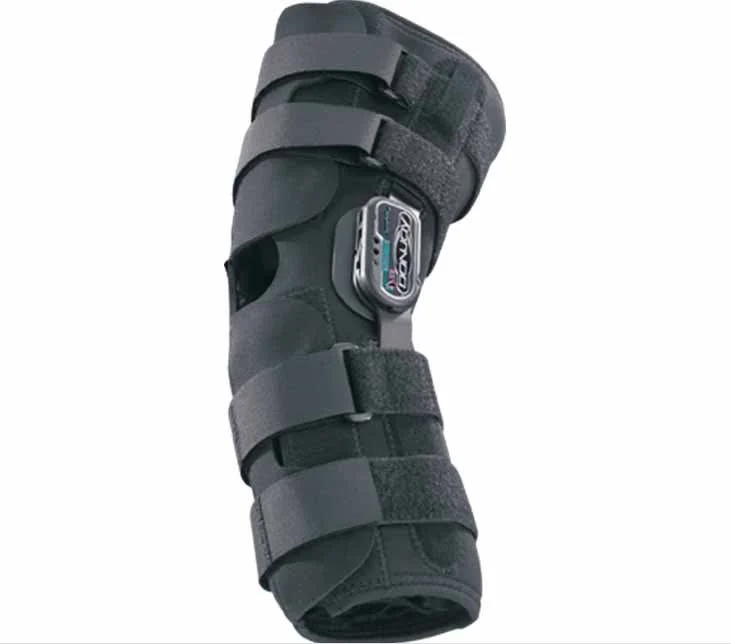
Best for: Severe instability, ligament injuries, chronic knee pain, post-injury recovery, osteoarthritis
Features: High-level support, adjustable hinges, robust construction
Price: £150-£250
Suitable for: Chronic knee pain, ACL/PCL injuries, severe instability, post-surgical support, osteoarthritis management
The DonJoy Performance Knee Brace provides maximum support for individuals with severe knee instability, chronic conditions, or significant ligament injuries. Its adjustable hinges allow for controlled range of motion while protecting the joint during activity.
Benefits:
- Firm support reduces joint strain and pain
- Adjustable hinges control range of motion safely
- Robust construction provides long-lasting stability
- Reduces risk of further injury during activity
- Allows safe return to activity after injury
Pros
- Excellent stability and support
- Robust construction for heavy use
- Adjustable for custom fit
Cons
- Bulkier than other options
- Higher price point
- May require professional fitting
Physiotherapist Commentary: Recommended for patients with ligament injuries or chronic knee conditions needing firm support. Best choice for severe instability or chronic knee conditions requiring maximum protection. If instability is severe, see our guide to knee giving way.
💡 Budget tip: DonJoy hinged braces (~£120–£180 new) are sometimes available second-hand through platforms like eBay at reduced prices. If purchasing used, verify the brace is the correct size, has intact hinges and straps, and shows no visible wear at hinge points. A physiotherapist can help check fit and suitability before use.
💰 Shock Doctor Knee Compression Sleeve – Best Budget Option
Best for: Beginners, mild knee pain, daily wear, casual users
Features: Compression sleeve, moisture-wicking material, simple design
Price: £10-£20
Suitable for: Mild knee discomfort, general support, post-exercise recovery, beginners exploring knee support
The Shock Doctor Knee Compression Sleeve offers affordable, basic support for individuals experiencing mild knee discomfort or those new to using knee braces. Its simple compression design promotes circulation and provides light support without bulk.
Benefits:
- Affordable entry point for knee support
- Promotes circulation and reduces swelling
- Lightweight and comfortable for daily wear
- Easy to put on and remove
- Good value for basic support needs
Pros
- Affordable price point
- Promotes circulation
- Comfortable for extended wear
Cons
- Less structural support for severe injuries
- Not suitable for high-impact activities
- Limited adjustability
Physiotherapist Commentary: Good for symptom management and post-exercise support. Ideal for beginners or those with mild knee pain who want to explore knee support without a significant investment.
Learn more about rehab exercises in our knee pain guide
🔎 Quick Answer:
The best knee brace depends on your needs:
- General recovery & daily support → ComfyMed Adjustable Knee Brace
- Sports & active use → Mueller Sports Knee Support
- Severe instability → DonJoy Performance Knee Brace
- Budget option → Shock Doctor Knee Compression Sleeve
For arthritis-specific recommendations, see our best knee braces for arthritis guide.
Explore complementary knee pain tools: Knee Pain Support Tools
Learn more about knee pain causes and treatments: Knee Pain Guide
Find a physiotherapist near you for personalised guidance
⭐ What Is The Best Knee Brace in 2026?
The best knee brace for most people is the ComfyMed Adjustable Knee Brace due to its balance of stability, comfort, and affordability.
Athletes may prefer the Mueller Sports Knee Support, while those with severe instability or chronic conditions often benefit from the DonJoy Performance brace for maximum joint protection.
For arthritis-specific recommendations, see our guide to the best knee braces for arthritis.
How to Choose the Right Knee Brace
Selecting the right knee brace depends on your specific needs, symptoms, and activity level. Key questions to consider:
What's your main concern?
Injury recovery: Hinged braces provide stability during rehabilitation. Sports activity: Lightweight, flexible supports maintain mobility. Chronic pain: Consider compression sleeves or hinged braces depending on severity. Arthritis: See our arthritis-specific guide for unloader braces and specialized options.
Swelling only?
If your main symptom is swelling without significant instability, compression sleeves or light support braces may be sufficient. These promote circulation and reduce fluid buildup without the bulk of hinged braces.
Giving way or instability?
If your knee gives way or feels unstable, you need a hinged brace with firm support. The DonJoy Performance provides the stability needed to prevent buckling. For severe instability, see our guide to knee giving way.
Activity level?
High-impact sports: Hinged braces offer maximum protection. Running or gym: Lightweight supports balance mobility and stability. Daily activities: Compression sleeves or adjustable braces provide comfort without bulk.
For exercise and rehab guidance, see our knee pain guide or view all knee pain tools.
Best Knee Brace for Meniscus Tear
A meniscus tear is one of the most common knee injuries, often caused by twisting, pivoting, or age-related degeneration. The right knee brace can help reduce rotational strain, improve joint alignment, and provide stability during recovery.
Key considerations for meniscus tear braces:
- Hinged braces offer superior rotational control for moderate to severe tears
- Compression sleeves work well for mild tears with swelling
- Stability level depends on how unstable your knee feels
- Post-surgery support often requires hinged protection
For comprehensive guidance on choosing the right brace for your meniscus tear, including detailed product reviews and physiotherapist recommendations, see our best knee brace for meniscus tear guide.
Looking for Arthritis-Specific Knee Braces?
If you're specifically looking for knee braces to manage osteoarthritis or arthritis, we have a dedicated guide covering:
- Unloader braces for unicompartmental osteoarthritis
- Best braces for walking with arthritis
- Bone-on-bone arthritis solutions
- Medial vs lateral compartment arthritis
- Budget options and second-hand brace guidance
See our comprehensive best knee braces for arthritis guide for detailed recommendations and fitting guidance.
Are Expensive Knee Braces Worth It?
The value of expensive knee braces depends on your specific needs and condition severity. Here's a breakdown:
Compression sleeves: No
Basic compression sleeves (£10–£30) provide similar benefits regardless of price. More expensive compression sleeves don't offer significantly better support or durability. Save your money here unless you need specific features like moisture-wicking or antimicrobial materials.
Hinged braces: Sometimes
Mid-range hinged braces (£50–£150) often provide excellent value. Premium hinged braces (£150–£300) offer better materials, adjustability, and durability, which can be worth it if you'll use the brace daily for years. However, a well-fitted mid-range brace may work just as well for many people.
Specialized Braces
Specialized braces like unloader braces (£200–£500+) are expensive but can be worth it for specific conditions like unicompartmental osteoarthritis. They're the only non-surgical option that actively reduces joint pressure. For arthritis-specific guidance, see our arthritis knee brace guide.
Consider your usage frequency, severity of symptoms, and activity level. For personalized advice on whether a premium brace is right for you, consult a physiotherapist.
How to Use Knee Braces Safely
Correct use ensures effectiveness and avoids dependency:
- Fit your brace as instructed by a physiotherapist
- Limit continuous wear; remove when safe to strengthen muscles
- Combine with physiotherapy exercises and rehab programs
For detailed guidance, see our knee pain guide or FAQ on using braces safely.
Budget Options: Second-Hand Knee Braces
Many people are on fixed incomes, trying to manage chronic conditions, or testing a brace before committing to a purchase. For these situations, second-hand braces can be a viable option, particularly for premium braces like the Össur Unloader One (~£250–£400 new) or DonJoy hinged braces (~£120–£180 new).
Safety Requirements for Used Braces
Used braces must meet these critical safety criteria:
- Correct size: Critical for unloader braces—wrong size means unloading won't work properly
- Intact hinges: No visible wear, damage, or looseness at hinge points
- Undamaged straps: All straps present, not stretched out or frayed
- Proper alignment: Brace maintains its structural integrity
Professional Assessment Recommended
Especially for unloader braces, professional fitting is essential. If alignment is wrong, unloading won't work properly and the brace may not provide the intended benefit. Always have a physiotherapist or orthotist assess fit and suitability before long-term use, even with second-hand braces.
Note: While second-hand braces can be cost-effective, they cannot be sanitized as thoroughly as new medical devices. Ensure proper cleaning and consider your individual health circumstances when making this decision.
Frequently Asked Questions About Knee Braces
What knee brace do doctors recommend?
Doctors and physiotherapists typically recommend different braces based on your specific needs: hinged braces for instability and ligament injuries, compression sleeves for mild support and swelling, and unloader braces for arthritis (see our arthritis-specific guide). The specific recommendation depends on your injury type, severity, activity level, and symptoms. For personalized recommendations, see a physiotherapist.
When should I wear a knee brace?
Wear a knee brace during activities that cause pain or instability, during sports or exercise if you have a history of knee problems, and during recovery from injury as recommended by your physiotherapist. Avoid wearing braces 24/7 unless specifically advised, as this can lead to muscle weakness. Use braces as a tool to support activity, not as a replacement for strengthening exercises.
Can knee braces help prevent injury?
Knee braces can provide support and proprioceptive feedback that may help reduce injury risk during high-risk activities, especially if you have a history of knee problems. However, the best injury prevention comes from proper strengthening, flexibility, and movement patterns. Braces should complement, not replace, a comprehensive injury prevention program.
Are expensive knee braces worth it?
Expensive knee braces (£150+) are often worth it if you have severe instability, chronic conditions, or need specialized support (like unloader braces for arthritis). For general recovery and mild support, mid-range options (£25-£50) often provide good value. The key is matching the brace to your specific needs—see our how to choose section above for guidance.
Do knee braces weaken muscles?
Knee braces don't directly weaken muscles, but over-reliance on braces without strengthening exercises can lead to muscle weakness. It's important to use braces appropriately—during activities that cause pain or instability—and remove them when safe to allow muscles to work. Combine brace use with physiotherapy exercises to maintain muscle strength.
Should you sleep in a knee brace?
Generally, no—most people shouldn't sleep in knee braces unless specifically recommended by a physiotherapist. Sleeping in a brace can cause skin irritation, restrict circulation, and isn't necessary since you're not weight-bearing. However, if you experience significant pain or instability at night, a light compression sleeve may be acceptable. Always follow your physiotherapist's guidance.
Is it safe to buy a used knee brace?
Used knee braces can be a budget option, but require careful evaluation. The brace must be the correct size (critical for unloader braces), have intact hinges and straps, and show no visible wear. Used braces cannot be sanitized as thoroughly as new medical devices. For unloader braces especially, professional fitting is essential—incorrect alignment prevents proper unloading. Always have a physiotherapist assess fit and suitability before long-term use. See our budget options section for detailed safety guidance.
How tight should a knee brace be?
A knee brace should be snug enough to provide support without cutting off circulation or causing numbness. You should be able to fit one finger between the brace and your skin. The brace should stay in place during movement without slipping. If you experience tingling, numbness, or skin discoloration, the brace is too tight. For hinged and unloader braces, professional fitting ensures optimal tightness.
Can knee braces reduce swelling?
Yes, compression sleeves and some hinged braces can help reduce swelling by promoting circulation and providing gentle compression. However, braces don't address the underlying cause of swelling. If swelling persists, it's important to address the root cause—whether it's inflammation, fluid buildup, or other factors. See a physiotherapist if swelling is significant or doesn't improve.
Find a Physiotherapist for Personalized Advice
Persistent knee pain or injuries require professional assessment. A physiotherapist can:
- Recommend the right brace for your condition
- Design an exercise or rehab program
- Guide safe use of supportive tools
Related Product Reviews
Need Professional Guidance?
A qualified physiotherapist can help you choose the right knee brace and develop a plan that fits your needs.