Massage Gun vs Foam Roller (2026): Which Is Better for Recovery?
Physiotherapist-informed comparison to help you choose the right recovery tools for soreness, mobility, and muscle tension
If you're deciding between a massage gun vs foam roller, you're not alone. Both are popular recovery tools — but they work differently, suit different problems, and aren't interchangeable.
PhysioDirectory Verdict
No single winner. For optimal recovery, use both — foam roller for mobility and full-body work, massage gun for targeted relief and convenience. If you must choose one: foam roller for beginners and budget; massage gun for deep knots and portability.
In this physiotherapist-informed guide, we break down:
- What each tool actually does
- When a foam roller is better
- When a massage gun is better
- Which is safer for back pain
- Whether you should use both
- And which one you should buy
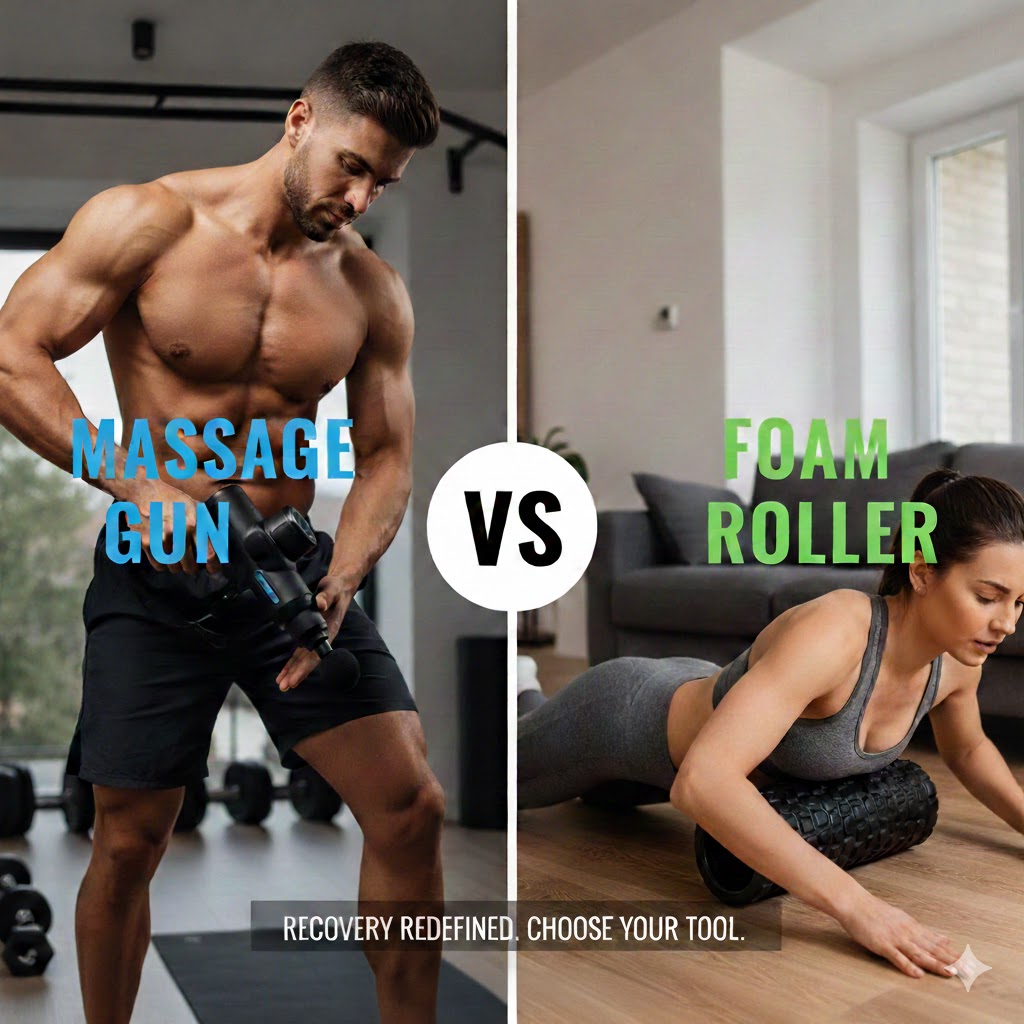
Quick Comparison: Massage Gun vs Foam Roller
| Feature | Foam Roller | Massage Gun |
|---|---|---|
| Type of pressure | Broad, sustained compression | Rapid percussive pulses |
| Best for | Large muscle groups, mobility | Targeted knots, quick relief |
| Intensity control | Bodyweight dependent | Adjustable speed & power |
| Cost | Low | Medium to high |
| Ease of use | Requires positioning | Easy to apply to specific spots |
| Portability | Lightweight but bulky | Compact & travel-friendly |
| Risk level | Low when used properly | Moderate if used incorrectly |
Quick answer:
- For overall mobility and flexibility → foam roller
- For pinpoint soreness and deep knots → massage gun
- For optimal recovery → many people benefit from using both
What a Foam Roller Actually Does
Foam rolling is a form of self-myofascial release. It uses your bodyweight to apply pressure to larger muscle groups.
It's most effective for:
- Quads
- Hamstrings
- Calves
- Glutes
- Upper back (thoracic spine)
When a Foam Roller Is Better
A foam roller may be the better choice if:
- You want to improve range of motion
- You're warming up before training
- You want full-leg recovery after running
- You're new to recovery tools
- You're on a budget
Because the pressure is broad and controlled by bodyweight, foam rollers are generally safer for beginners. They're especially useful for runners and gym-goers who need general tissue work rather than deep trigger point therapy. See our guides to top-rated recovery rollers and soft rollers for first-time users.
What a Massage Gun Actually Does
Massage guns deliver rapid percussive therapy — small, repetitive pulses into muscle tissue. They are particularly useful for:
- Localised tight spots
- Trigger points
- Post-workout muscle soreness
- Pre-workout activation
Unlike foam rollers, massage guns allow you to target very specific areas, such as:
- Calf knots
- Glute trigger points
- Upper trapezius tension
- Around the shoulder blade
When a Massage Gun Is Better
A massage gun may be the better option if:
- You struggle to reach certain areas
- You want deeper, focused pressure
- You need quick relief before training
- You travel frequently
- You don't want to position yourself on the floor
However, technique matters. Using a massage gun incorrectly — especially on the neck, spine, or bony areas — can cause irritation. See our physio-reviewed percussive therapy guide for more.
Massage Gun vs Foam Roller for Runners
Runners commonly experience tightness in:
- Calves
- IT band
- Quads
- Hamstrings
- Glutes
Foam Roller for Runners
Best for:
- Rolling large muscle groups after long runs
- Improving hip and quad mobility
- Maintaining flexibility between sessions
Foam rollers are excellent for post-run recovery routines.
Massage Gun for Runners
Best for:
- Targeting deep calf tightness
- Quick glute activation before runs
- Managing isolated sore spots
If you're running high mileage, a combination approach often works best:
- Before running: light massage gun activation
- After running: foam rolling for overall recovery
Massage Gun vs Foam Roller for Calves
Calves are one of the most common areas people target — and both tools can help. A foam roller gives broad, sustained pressure along the gastrocnemius and soleus, which works well for general tightness and post-run recovery. A massage gun lets you zero in on specific knots or trigger points with deeper, focused pulses. Foam rolling is often better for a full calf sweep; a massage gun is better for stubborn spots. Many people use both: light massage gun work before a run, foam rolling after.
For Back Pain: Which Is Safer?
This is where context matters.
Foam Roller for Back Pain
Foam rollers are commonly used for:
- Thoracic spine mobility
- Upper back tightness
- General muscle stiffness
They are not recommended for direct pressure on the lower spine (lumbar vertebrae). Instead, they should be used on surrounding muscles. Foam rollers tend to be safer for general back stiffness. See our spine-safe foam roller guide.
Massage Gun for Back Pain
Massage guns can help with:
- Muscle-related back tension
- Tight paraspinals
- Glute-related lower back pain
However:
- Avoid using directly over the spine
- Avoid high speeds near the neck
- Do not use over acute disc injuries
If back pain is nerve-related (radiating pain, numbness, tingling), neither tool should replace proper assessment. See our percussive therapy options for back tension and consider consulting a physiotherapist.
Can You Use Both?
Yes — and in many cases, that's ideal. Each tool has strengths.
A simple structure:
Pre-workout:
Use a massage gun for 30–60 seconds per muscle group to stimulate tissue.
Post-workout:
Use a foam roller for broader muscle recovery and mobility.
Recovery days:
Use both strategically — massage gun for specific tight areas, foam roller for full-body maintenance.
They are not competitors. They are complementary.
When You Should NOT Use Either
Avoid both tools if you have:
- Acute muscle tears
- Severe inflammation
- Bruising
- Blood clotting disorders
- Recent surgery
- Suspected stress fractures
- Severe osteoporosis
If pain worsens with use, stop immediately. Recovery tools are supportive — not replacements for diagnosis.
Massage Gun vs Foam Roller for Specific Goals
For Flexibility
Foam roller wins. It improves mobility and joint range when paired with movement.
For Deep Knots
Massage gun wins. It provides more focused percussive pressure.
For Beginners
Foam roller is simpler and safer to start with.
For Budget
Foam rollers are far more affordable.
For Travel
Massage guns are easier to pack and use anywhere.
For Long-Term Recovery Setup
Using both gives the most flexibility.
Common Questions
Is a massage gun better than a foam roller?
Not necessarily. Massage guns are better for targeted muscle relief, while foam rollers are better for broader mobility and recovery work.
Should I use a massage gun before or after foam rolling?
If using both, apply the massage gun first for activation, then foam roll for overall recovery.
Do massage guns break up knots?
They can reduce muscle tension and improve blood flow, which may relieve tight trigger points — but they don't "break up" tissue physically.
Can you use a massage gun every day?
Yes, if used appropriately and not over inflamed or injured areas. Keep sessions short and moderate in intensity.
Final Verdict: Which Should You Buy?
If you're deciding between the two:
Choose a foam roller if:
- You want to improve flexibility
- You need full-body recovery
- You're new to recovery tools
- You're on a tight budget
Choose a massage gun if:
- You want deep, targeted relief
- You struggle to reach certain muscles
- You want portable recovery
- You prefer convenience
Best overall solution:
Use both strategically. A foam roller builds long-term mobility. A massage gun helps with fast, targeted relief. If you're serious about recovery, they complement each other well.
Next Steps
If you're ready to choose:
Choosing the right tool isn't about trends — it's about matching the tool to your body, your training, and your goals.
Need Professional Guidance?
A qualified physiotherapist can help you choose the right recovery tools and develop a plan that fits your needs.